DIY Footing Forms: How to Square and Brace Without a Crew
DIY footing forms: how to square and brace without a crew is one of the most important steps in the entire building process because it affects almost every part of the construction project. If this step is done well, you will have a smooth time installing your building materials. There are two ways to measure if your foundation is square. I encourage you to do both. There is the diagonal method and the 3-4-5 rule method.
Step 1: Getting Your Footing Forms Perfectly Square
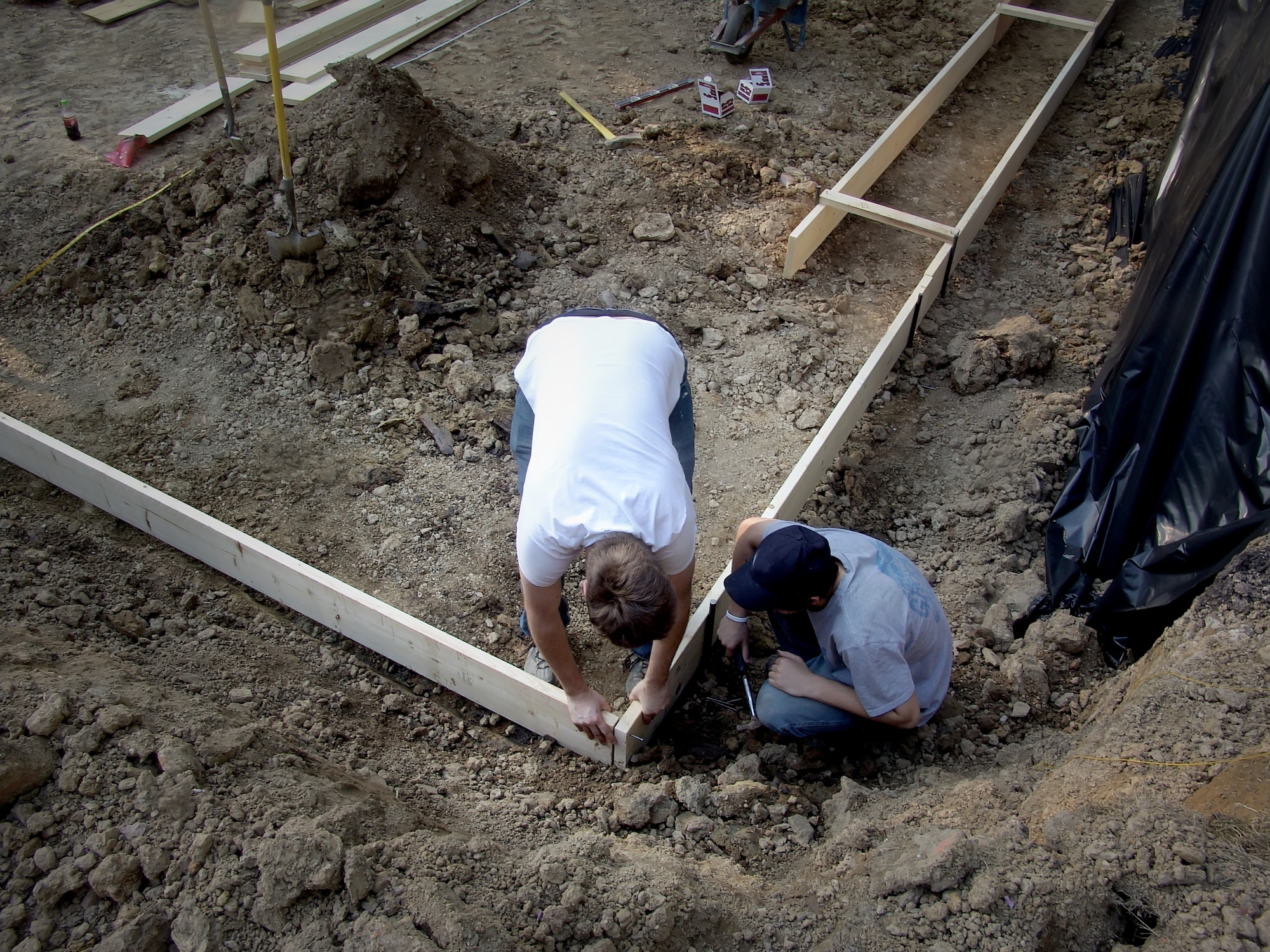
Build your footing forms according to the measurements in your house plan. You will have an outside set of forms and inside set of forms. Try to get them close to the plan. If you have a framer's square you can put that on each outside corner to gauge how precise it is, but at this point it's more important to complete the forms and then adjust them later if you need to adjust them.
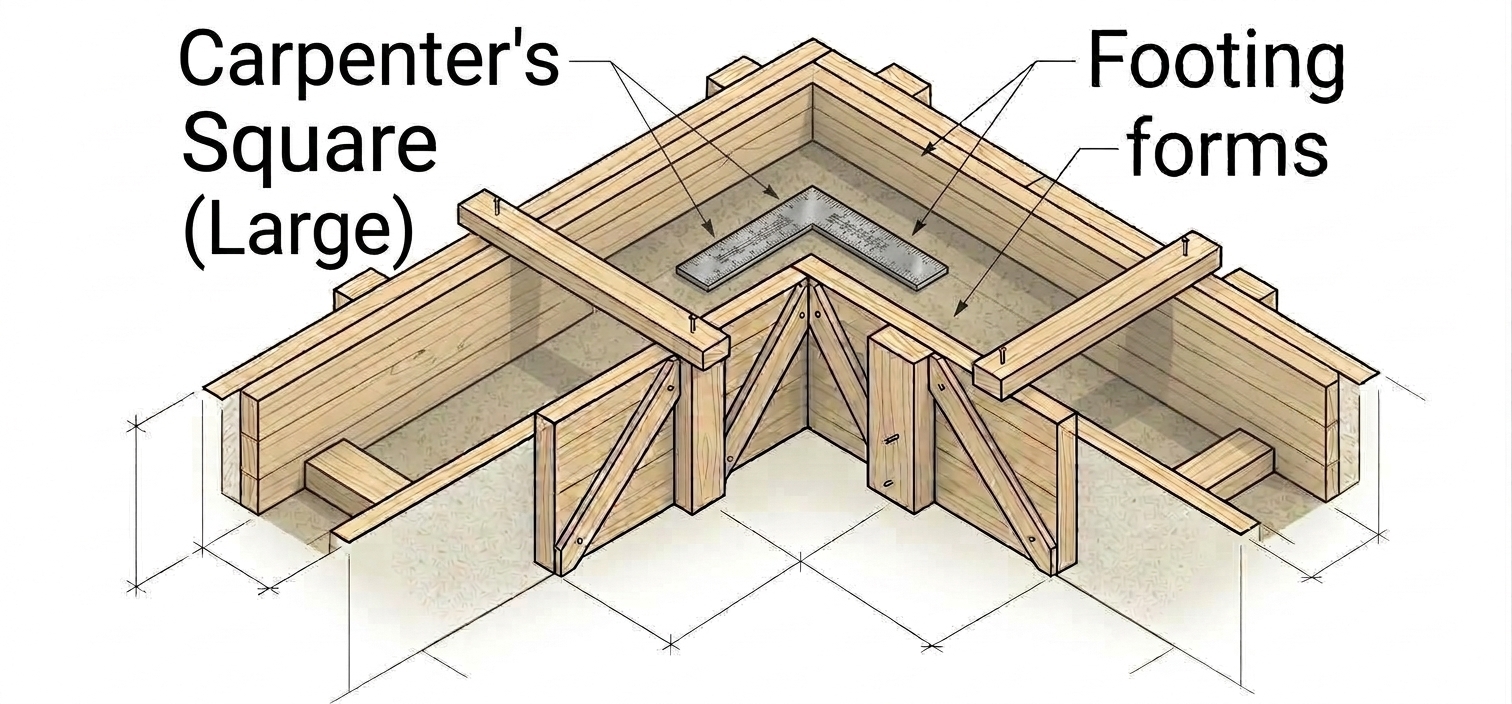
Using a framer's square (or carpenter's square) can give you a rough idea of how the forms are lining up to be square. It is a handy preliminary first step, but I don't consider it a method to determine overall squareness of the footing because it is such a small area measured. Still, it helps get things lined up at first.
The Diagonal Measurement Technique
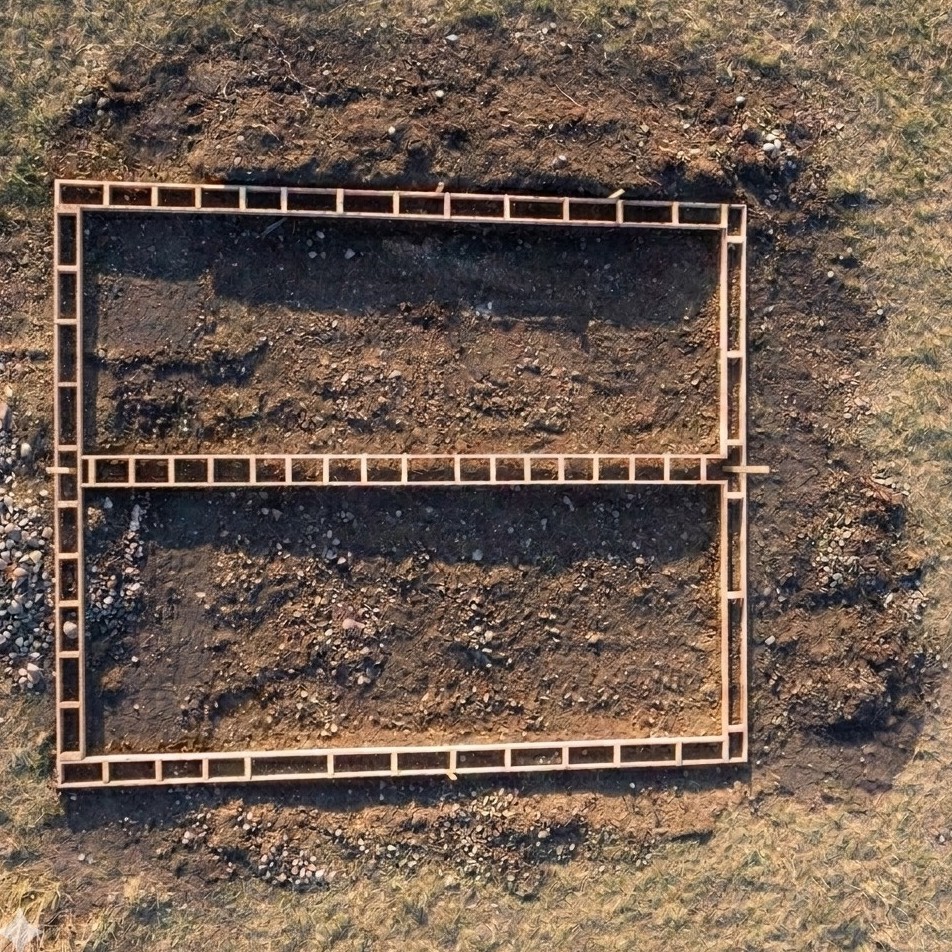
You want to get all four corners perfectly square, by first doing a diagonal measurement from corner to corner. You will need a long tape measure. Both diagonal measurements need to be exactly the same. If they are not, you can push or pull the corners slightly until the measurements match. Once that happens you can brace the forms so they don't move with the heavy weight of the cement.
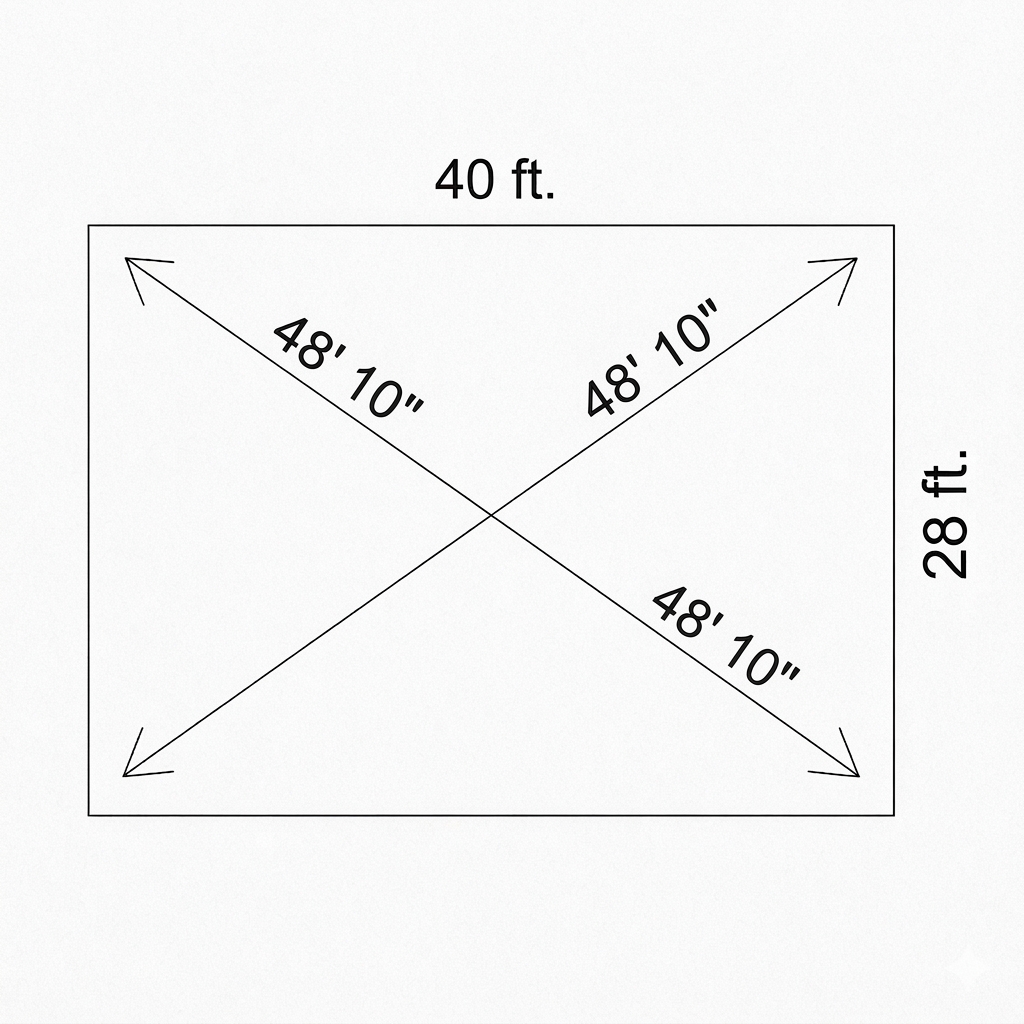
Ensuring your footing forms are perfectly square is one of the most critical steps in the entire build.
Any errors made here will compound, creating alignment issues through framing, roofing, and finishing. Taking the time to get this exact will save you immense frustration later.
While a large carpenter’s square can help check small sections, the most accurate method for a DIY builder is the diagonal measurement technique (also known as squaring the rectangle). Measure diagonally from opposite corner to corner in an 'X' shape. The two diagonal measurements must be identical down to the fraction of an inch. If they match, your corners are perfectly square.
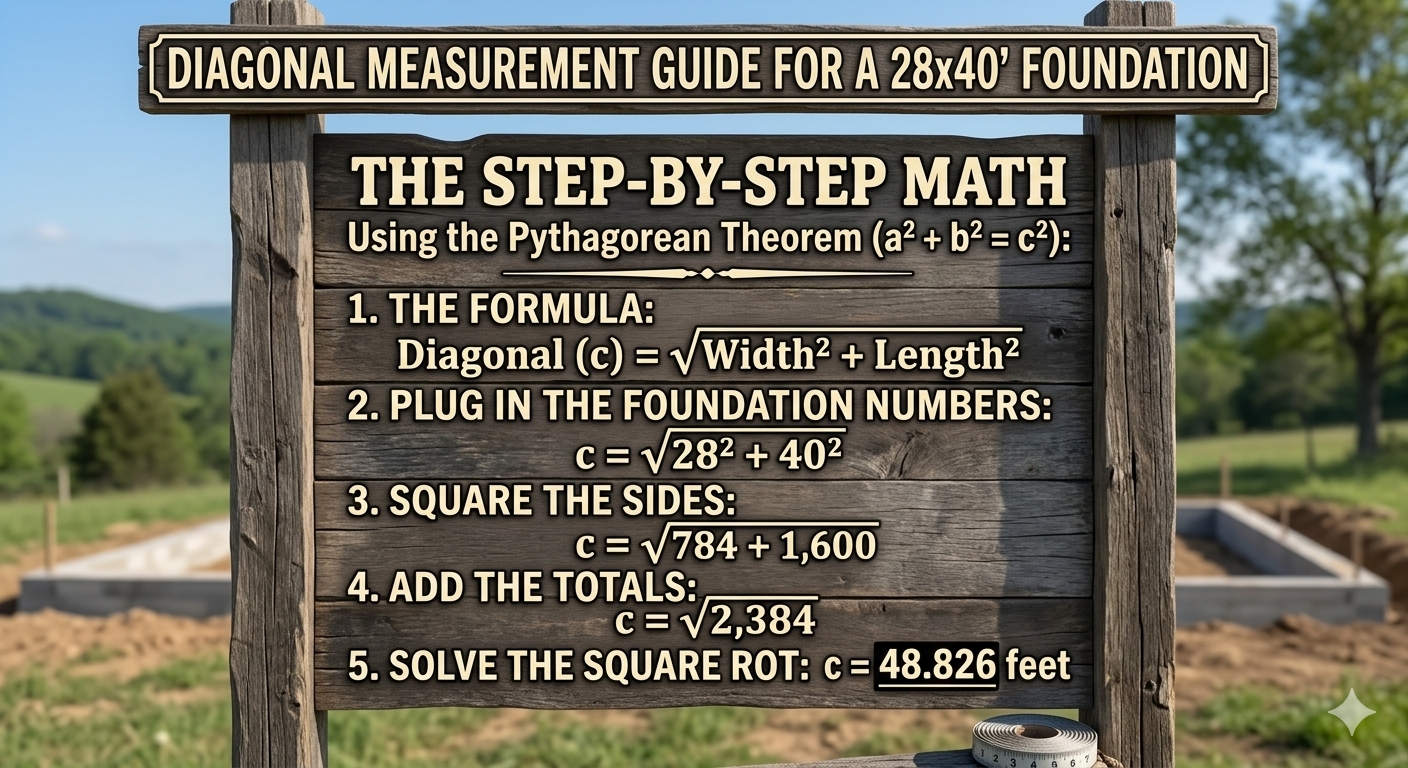
OK, so here's the formula so you can figure out the exact measurement you will need for your diagonal measurements. You just enter the length and width of your plan. You might need a calculator.
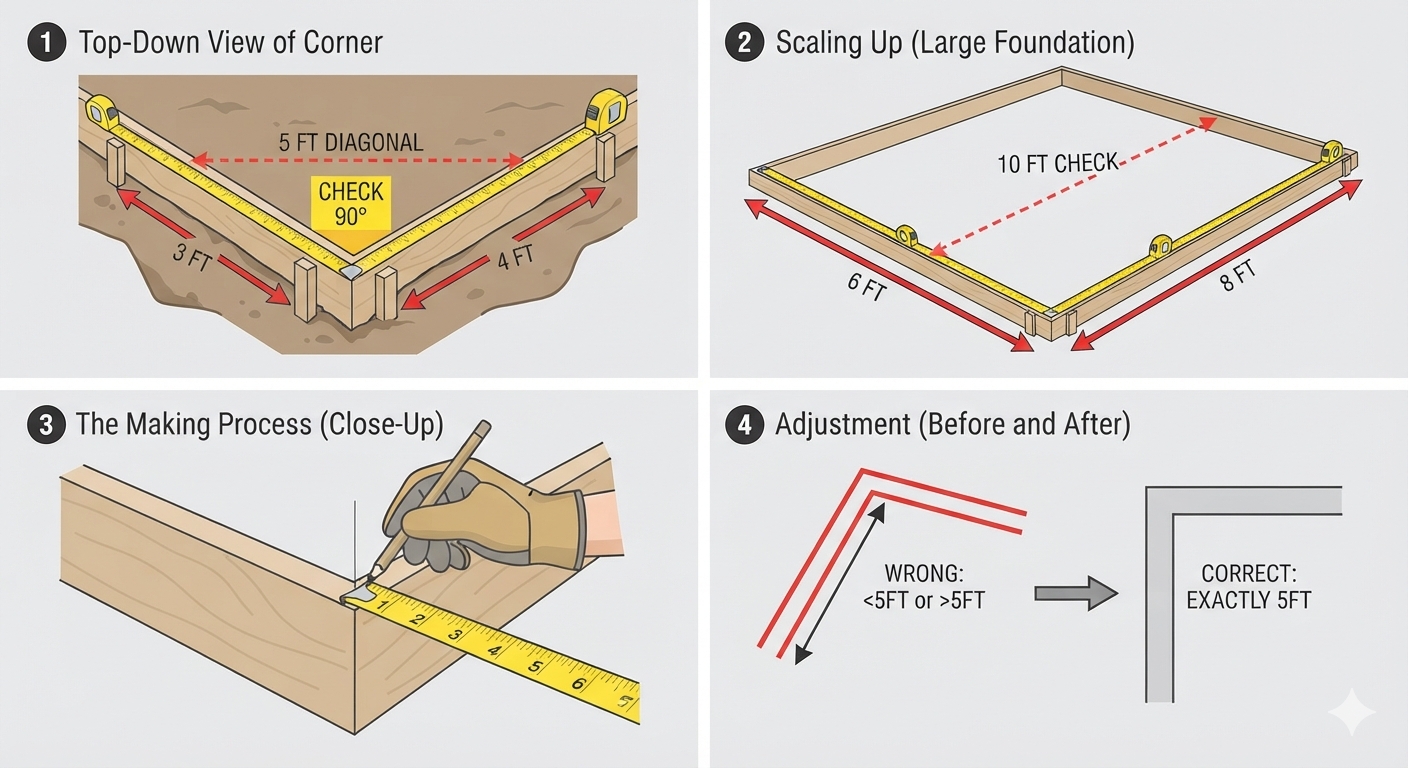
The second foundational technique is the 3-4-5 rule, which uses a right triangle to establish a precise 90-degree angle. Master this geometry early, as you will use it repeatedly throughout construction. Once you have successfully squared the exterior perimeter of the footing forms, you can then measure inward to establish the consistent width needed for the interior form walls.
How to Use the 3-4-5 Rule Solo
How to execute the 3-4-5 rule:
- From the corner you want to check, measure exactly 3 feet along one side of your form and make a mark.
- From that same corner, measure exactly 4 feet along the perpendicular side and make a mark.
- Measure the diagonal distance between those two marks.
- If the distance is exactly 5 feet, your corner is perfectly square. If not, adjust your forms until it hits 5 feet exactly. For larger structures, you can multiply these numbers (e.g., using a 6-8-10 or 9-12-15 foot ratio) to increase accuracy across longer distances.
Once you have successfully squared the exterior perimeter of the footing forms, you can then measure inward to establish the consistent width needed for the interior form walls.