Minimum Tool Checklist for Owner Builders: Build a House Yourself Without Overspending
🏠 Minimum Tool Checklist for Owner Builders (Build a House Yourself)
Taking the leap to build your own home is one of the most rewarding challenges you will ever face, but walking into a home improvement center without a plan is a fast track to a drained bank account.
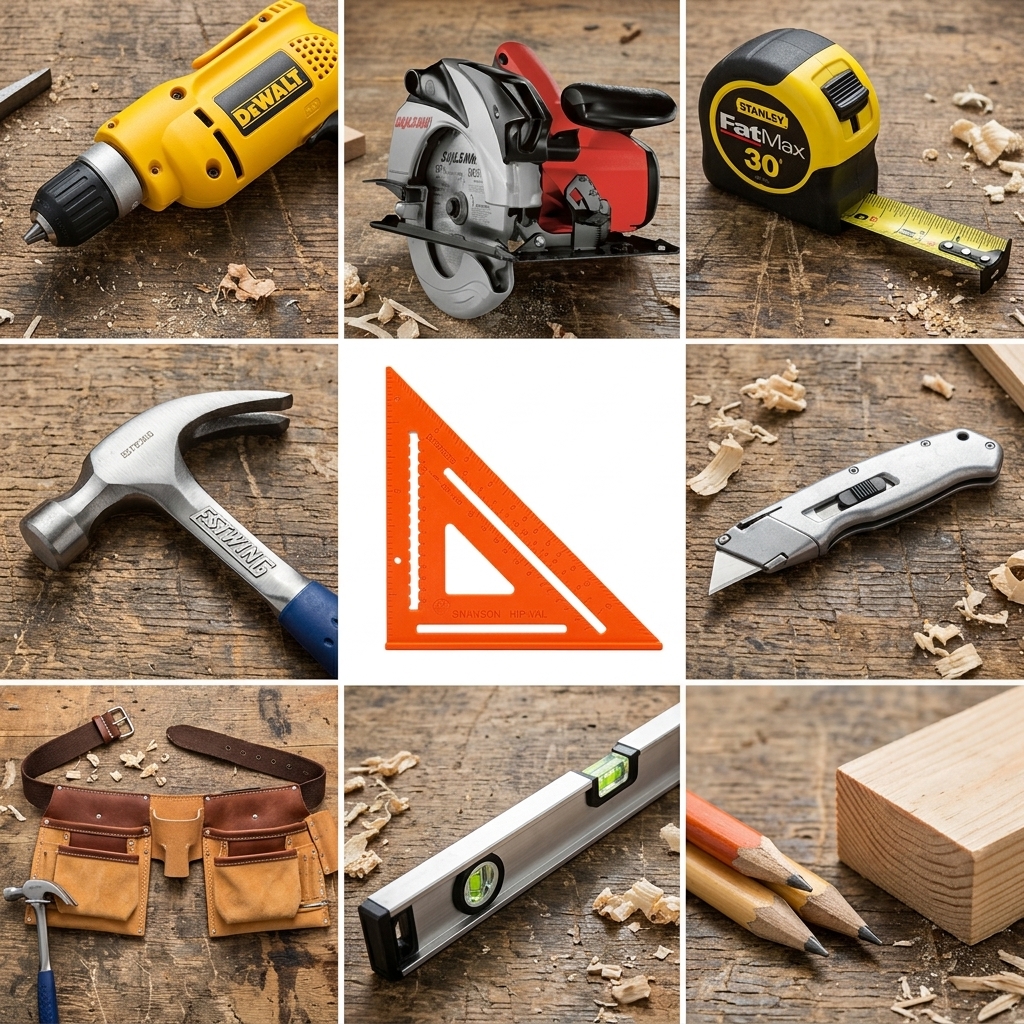
In fact, you could end up spending everything you saved in the first year, just overspending on tools. Our goal is to build our home and save money. This is a perfect place to start.
There are tools you will use constantly throughout your project. These are the tools you should pay a little more for quality. I think mid level quality will be fine. By investing only in the essential framing, cutting, and alignment tools required to dry-in your structure, you can successfully build a house yourself without overpaying for specialized machinery you will never use again.
A drill, for example, will be used mostly for driving screws and occasionally drilling holes. Don't buy a low-end drill for $30. It will have low torque and will probably die before the project is done. A quality $200 drill will be adequate. I mention this because a person can find and spend $5,000 on a drill if they want the best quality. It's the same for every tool. You also have the option of buying rechargeable tools so you aren't tripping over the cord. They are more expensive, but not by much, so I will say it's a matter of preference.
🔨 Core Tools to Spend a Little Extra For
These are the heavy-hitters that build the skeleton of the house. Brand quality matters here for accuracy, safety, and durability:
- Power Drill / Driver: Look for a brushless motor (DeWalt or Makita are highly reliable choices for framing) with plenty of battery.
- Circular Saw: A rugged, heavy-duty saw with a clean sightline is crucial for repeatable, straight framing cuts.
- Hammer: A balanced, shock-absorbing framing hammer (like a 19oz to 22oz smooth or milled face) will save your elbow and wrist over thousands of strikes.
- 4-Foot Level: Structural integrity depends on accuracy. A high-visibility, heavy-duty level ensures your foundation walls and framing stay perfectly plumb and level.
- Tape Measure: You'll want a durable 25-foot or 30-foot tape with a standout wide blade so you can measure long distances solo.
- Small Carpenter's Square (Speed Square): Essential for marking quick 90-degree and 45-degree cut lines on studs and joists.
- Utility Belt: A comfortable, supportive belt to carry your hand tools and fasteners keeps you moving efficiently without losing your gear.
- Utility Knife: A sturdy, comfortable knife with quick-blade changes for cutting everything from building wrap to structural materials.
Your second block of text...