How Far Can a 2x10 Floor Joist Span Without Support? (IRC Codes)
How far can a 2x10 floor joist span without support? Stop staring blindly at confusing, multi-page building code tables. If you are framing a floor, you don't need a degree in structural engineering—you just need a straight answer to a simple question: how far can a 2x10 floor joist span without support beams or girders cutting your room in half?
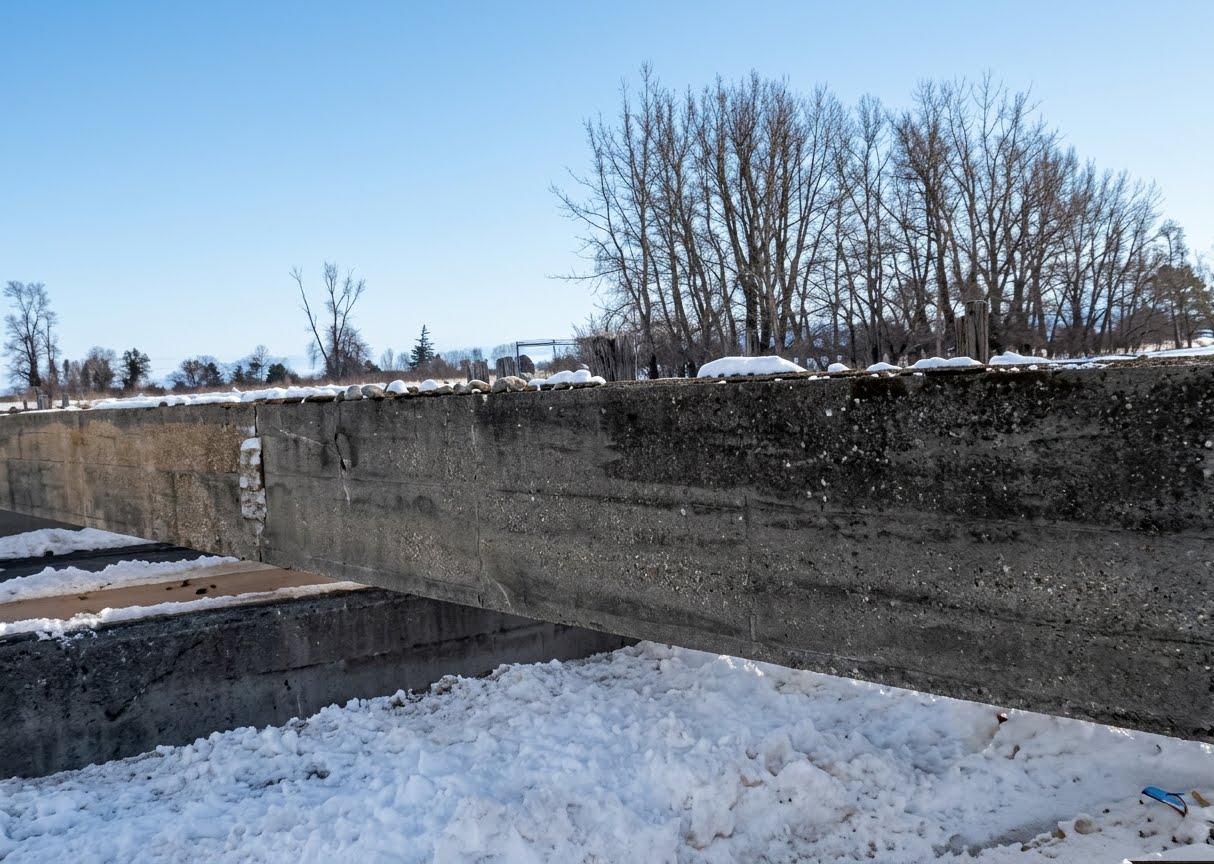
My home was only 24 feet wide, but that was too far a span for one 2X10 so I needed to break it up which is the case most of the time in home construction. I used 12 foot 2X10's on 16-inch centers. Many smaller homes are being built that are much narrower than this so it's possible to get away with not needing to put in a girder up the middle.
Whether you are clearing space for a completely open living area or trying to decide if you need to double up your layout, discovering exactly how far a 2x10 floor joist can safely span without support beams based on wood species and spacing codes is the absolute first step to a rock-solid build. Let’s break down the exact numbers you need to keep your project safe, sturdy, and strictly up to code.
Code Variables & Criteria
The IRC bases its span tables on four critical engineering factors:
- Design Load (Live vs. Dead):Living Areas: Required to support a 40 psf (pounds per square foot) live load.Sleeping Areas & Attics (with fixed stairs): Allowed a lower 30 psf live load.Dead Load: Standard calculations assume 10 psf or 20 psf for the weight of the building materials themselves.
- Deflection Limit: The code enforces a maximum deflection of L/360 (the span length divided by 360). This prevents bouncy, vibrating floors and keeps drywall or plaster ceilings beneath from cracking.
- Clear Span vs. Lumber Length: The code tables measure the clear span—the open-air distance between the inside faces of the structural supports. Per IRC R502.6, each joist must have a minimum bearing length of 1.5 inches on wood/steel or 3 inches on masonry.
- Lumber Grade and Species: Harder, denser woods (like Select Structural or #1 Grade Douglas Fir) can safely span farther than lower grades (#2 or #3) or softer species.
How Far Can a 2x10 Floor Joist Span Without Support?
Standard IRC Floor Span Tables
Lumber
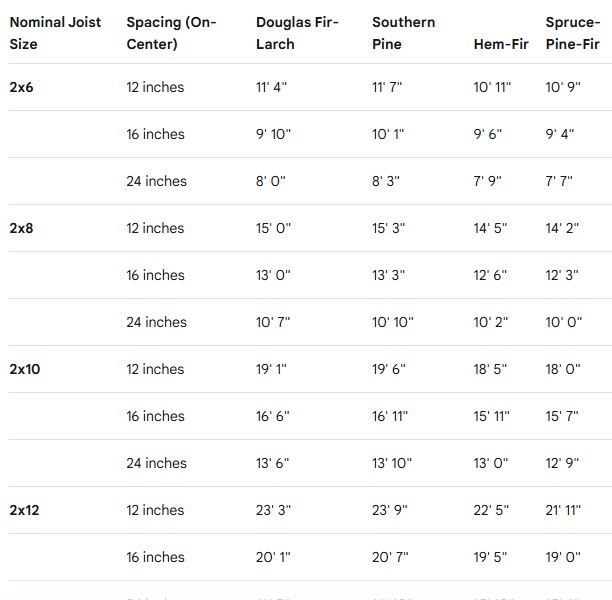
The following values represent baseline maximum spans for #2 Grade Lumber in standard Living Areas using common wood species.
Fabricated I-joists, like Weyerhaeuser's Trus Joist TJI Series, significantly outperform dimensional lumber in both stability and raw span capability. Because they are engineered with solid wood or LVL flanges and an OSB center web, they don’t warp, crown, or shrink, drastically reducing floor squeaks.
Fabricated I-joists
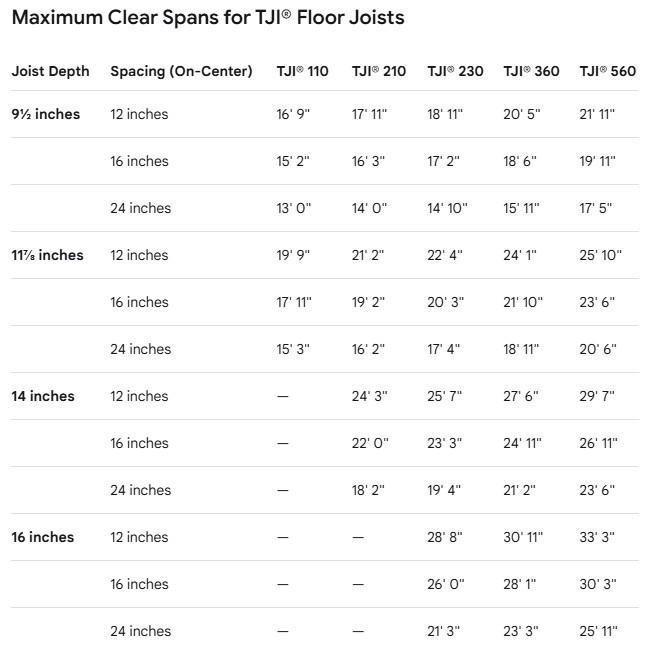
Wow, I guess it sums it up quite a bit. In short, I-joists seem to be the champion in a side by side comparison for the most part. They seem to be stronger and lighter. That doesn't mean it is the better choice for your situation. My whole premise here is to help owner-builders save money. My advice is to get what's more affordable for you.