How to tell which way a 2x10 is crowned
Learning how to tell which way a 2x10 is crowned is important in order to prevent sags. You see, lumber comes some of the time with a crown or is arched. Sometimes it has to do with the wood grains and the drying process that cause the warpage, but it is very common and something to be aware of.
How to Tell Which Way a 2x10 is Crowned:
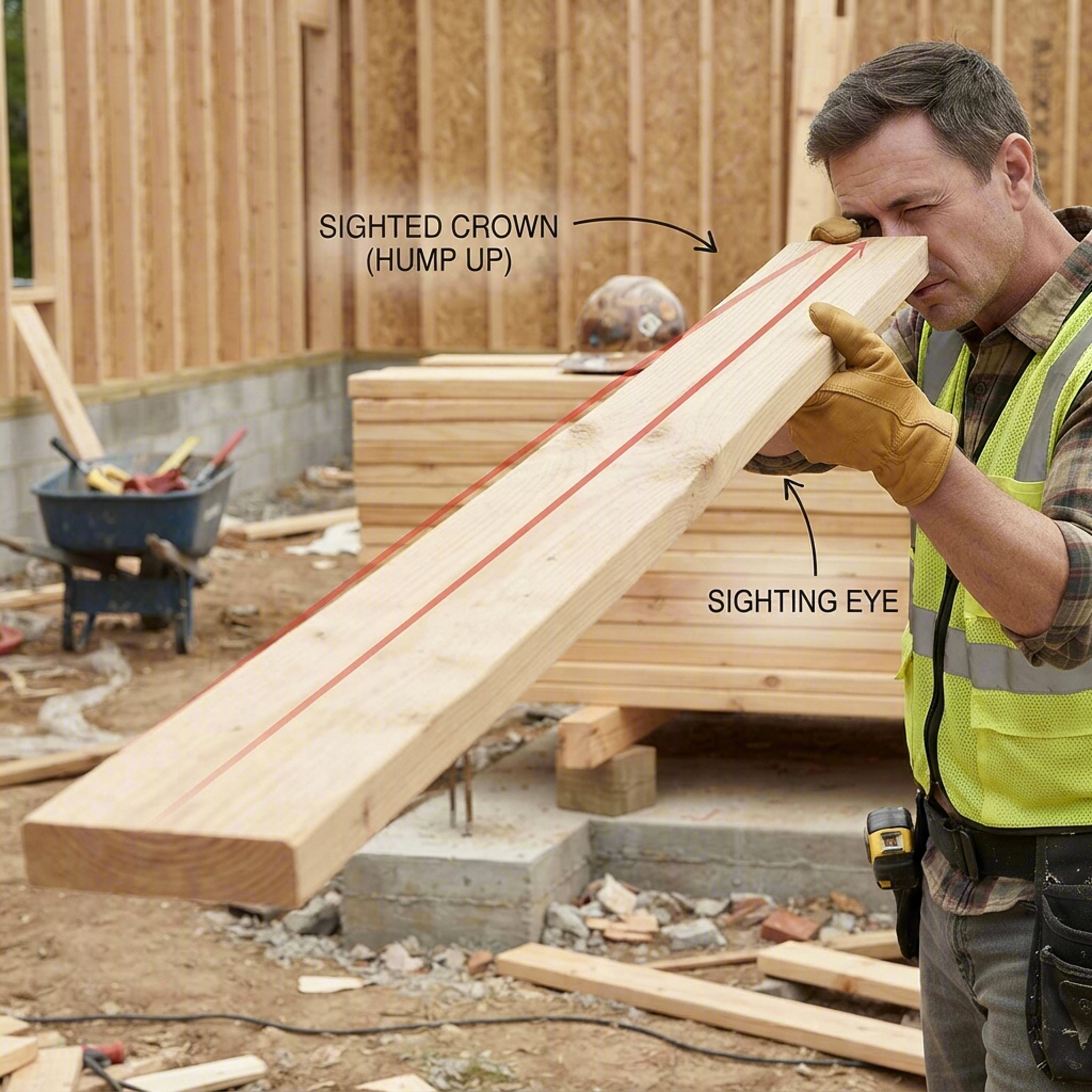
When framing a floor system with dimensional lumber like 2x10s, you cannot just grab a board and nail it down blindly. Every single solid wood board has a natural curve along its narrow edge. This curvature is called the crown.
If you install your floor joists upside down, your floor will eventually sag, bounce, and develop permanent, uneven dips. If you install them correctly, gravity works with your house to create a perfectly flat, rock-solid surface.
This guide breaks down exactly how to spot the crown and which way it needs to face before you drive a single nail.
What is a Wood "Crown" and Why Does It Matter?
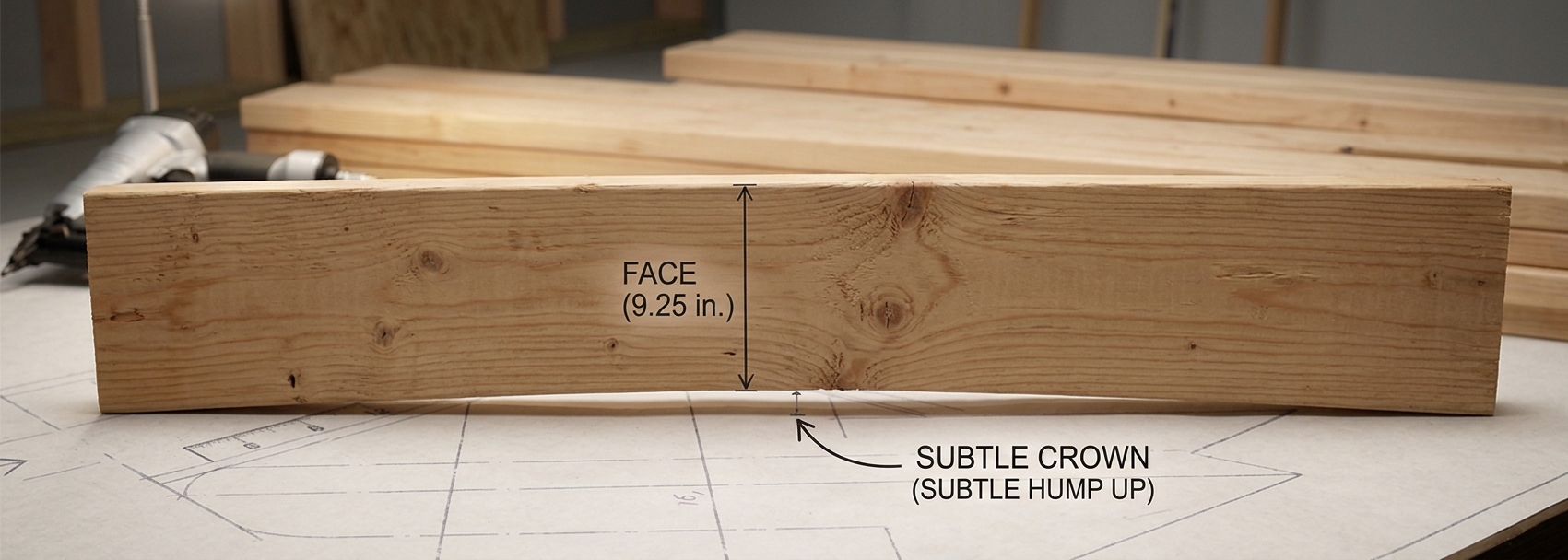
Trees do not grow perfectly straight. When logs are milled into 2x10 framing lumber, the natural stresses and grain patterns of the wood cause the board to bow slightly along its thin edge.
- The Crown: The high side of the curve (the hump).
- The Dip: The low side of the curve (the valley).
If you place a 2x10 flat across two supports, the middle of the board will either arch upward or sag downward depending on how it is oriented.
How to Tell Which Way a 2x10 is Crowned: The Beginner’s Guide to Sighting Framing Lumber
Step-by-Step: How to Sight a Crown Like a Pro
Finding the crown takes less than five seconds once you train your eyes what to look for. Follow this simple field method used by professional carpenters on every job site:
- Pick Up the Board: Lift one end of the 2x10 up to your eye level, letting the far end rest on the ground or a pile of lumber.
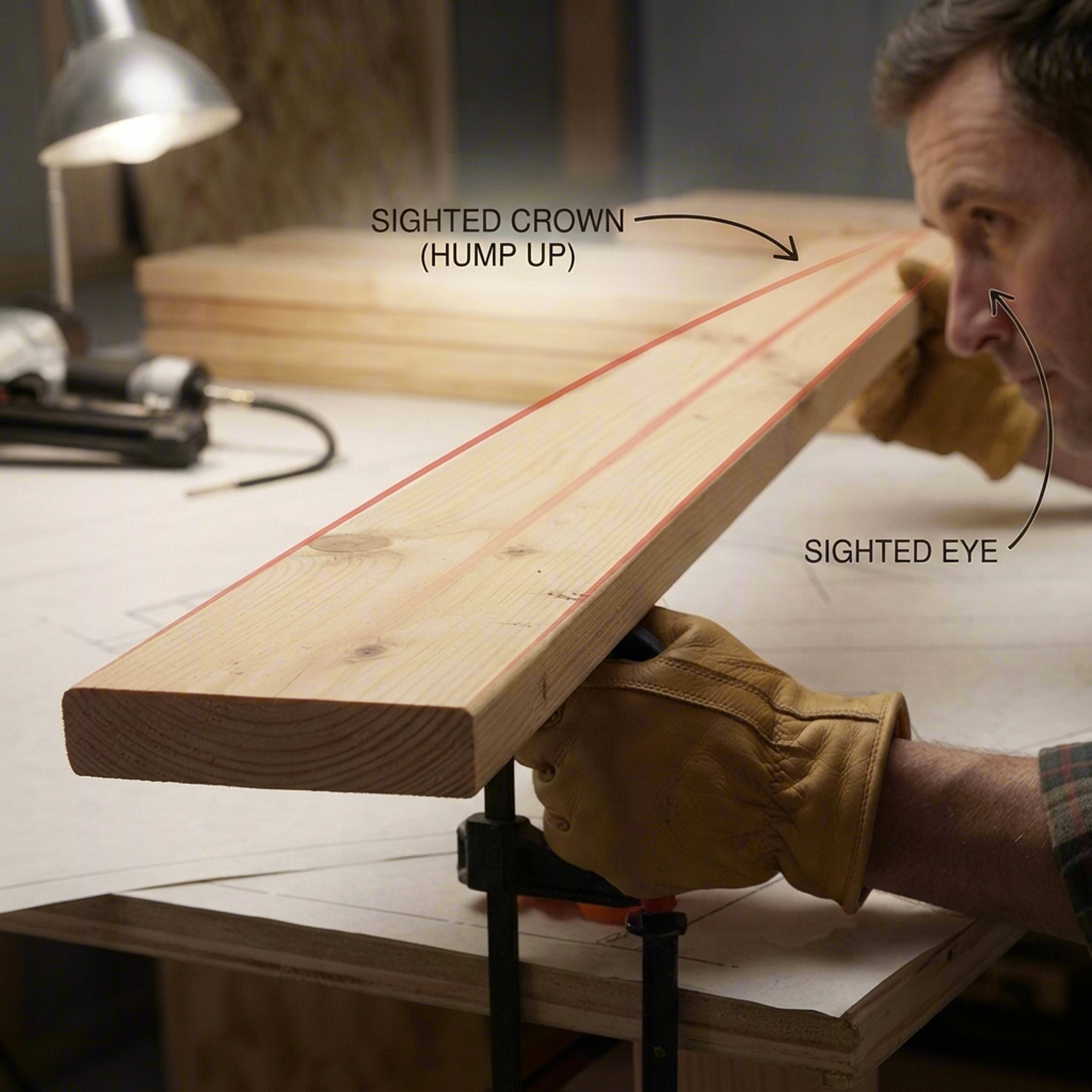
- Hold it Flat: Look down the narrow, 2-inch edge of the board (not the wide 10-inch face) as if you are aiming a rifle.
- Sight the Line: Look straight down the line from your eye to the far end. You will easily notice a slight upward arch or a downward dip.
- Mark the Crown: Turn the board so that the edge arches upward like a rainbow. Take a carpenter's pencil and draw a quick arrow pointing up toward that high edge. This ensures you won't have to sight the board a second time during installation.
Alternative Trick: The String Line Method
If you are having trouble seeing the curve with your bare eyes, lay the 2x10 flat on its 10-inch face. Pull a tight piece of string from one end of the narrow edge to the other. Look at the gap between the string and the wood in the exact center of the board. The side where the wood pushes out closest to the string is your crown.
The Golden Rule: Crown Up or Crown Down?
Always install every floor joist with the crown facing UP.
When you frame a floor system, you will secure the ends of the joists to your perimeter frame (see our guide on [how to fasten a rim joist to a sill plate]). This leaves the middle of the 2x10 spanning across thin air.
- Why Crown Up Works: When you later install heavy plywood subflooring, drywall ceilings below, furniture, and appliances, all of that downward weight (called dead and live loads) pushes down on the upward hump. Over time, this weight forces the crown to flatten out perfectly straight.
- What Happens if You Crown Down: If you install a board with the hump facing downward, gravity and the weight of the house will pull it down even further. This creates an immediate, permanent sag in your floor that will cause your subfloor sheets to creak, crack, and squeak when walked on.
What to Do with Severely Warped or "Ratty" Boards
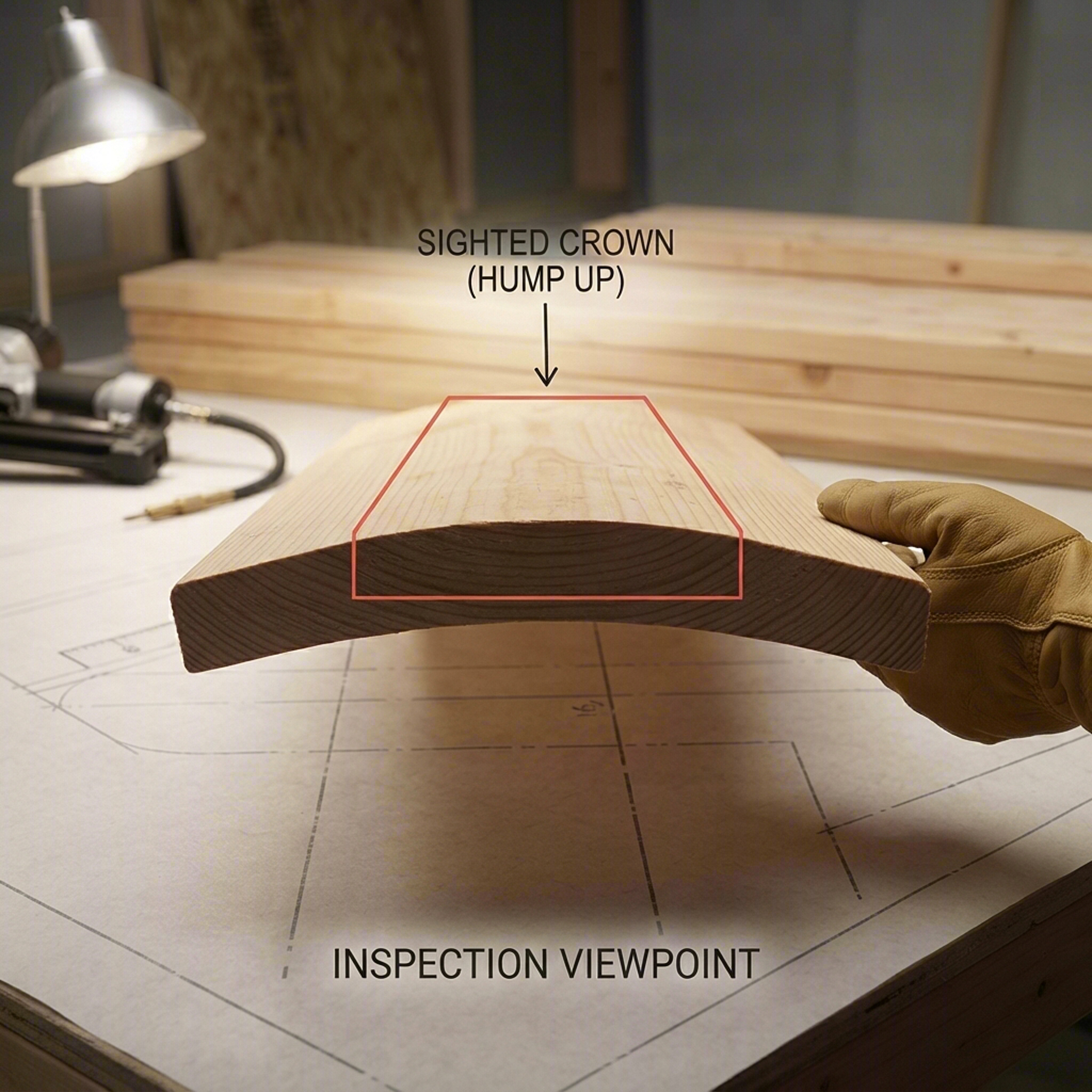
Not every 2x10 from the lumber yard is perfect. Some boards have massive crowns, twists, or surface damage from previous structural uses—like acting as temporary concrete form boards.
- Moderate Crowns: Regular, slight curves are completely normal. Use them right in the middle of your standard floor spans.
- Severe Crowns: If a board has an aggressive, exaggerated hump, do not use it as a standard floor joist. Instead, set it aside. You can cut it down into shorter pieces to use for solid blocking or fire blocking between your straight joists. Shorter lengths eliminate the dramatic curve entirely.
- Reused Form Boards: As noted in our primary framing layout, 2x10s used for foundation forms might look dirty, but they are perfectly fine to use as floor joists as long as they are sighted correctly and installed crown up.